
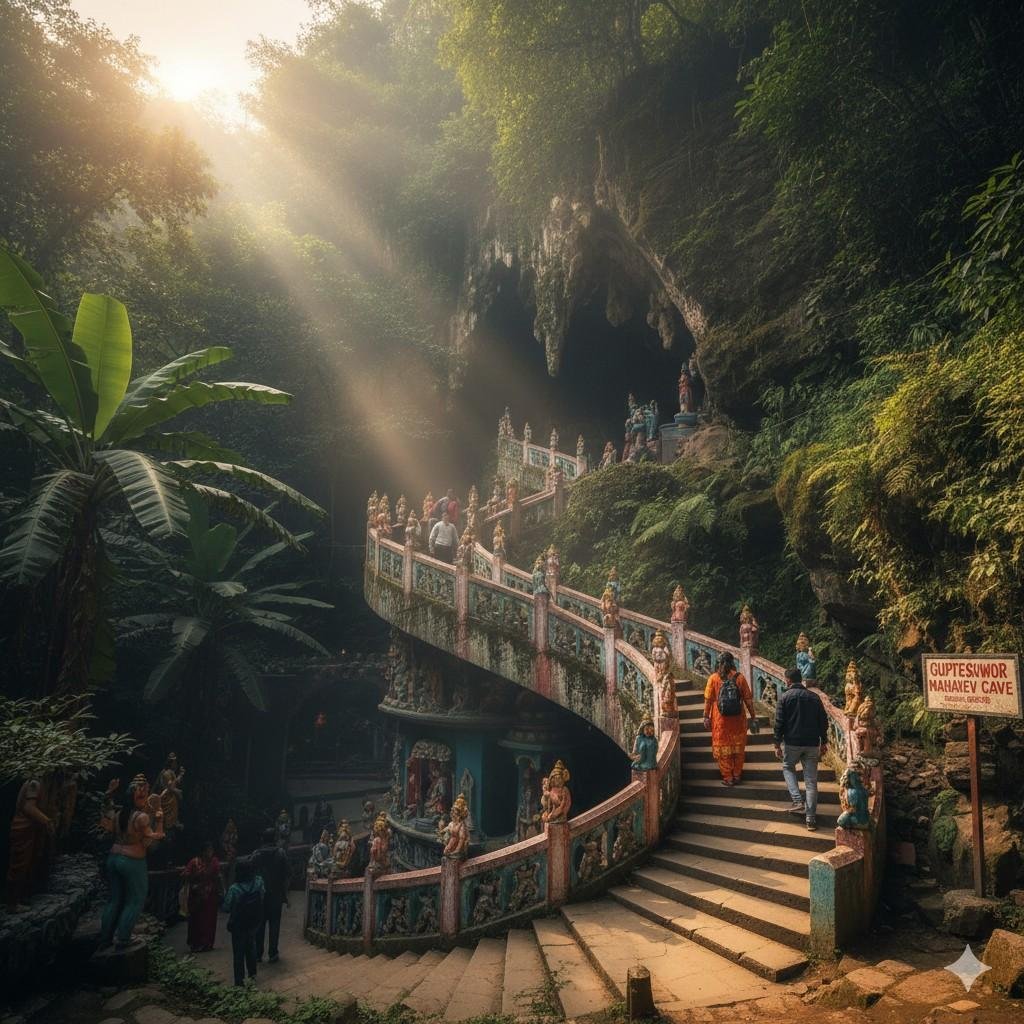
Gupteshwor Mahadev Cave: Nepal’s Most Sacred Underground Journey
The Legend of the “Hidden God”
Gupteshwor Mahadev Cave, located in Pokhara- 17, is deeply revered as one of Nepal’s most significant religious sites. The name “Gupteshwor” translates to “Hidden God” (Gupta = Hidden, Eshwor = God), referring to the sacred Shiva Lingam discovered by locals in the 16th century while clearing grass. Although the modern concrete entrance and facilities were developed in the early 1990s, the cave has been a pilgrimage site for centuries.
A Geological Wonder: The Longest Cave in Nepal?
Stretching nearly 2,950 meters, Gupteshwor is often cited as the longest cave in Nepal. This massive limestone structure features impressive stalactites and stalagmites that have formed over thousands of years. The cave system is divided into two main sections: the first hall, which houses the temple, and the deeper passages that lead toward the base of the waterfall.
Inside the Cave: What to Expect
The Spiral Staircase and Statues: Upon entering, visitors descend a magnificent concrete spiral staircase adorned with intricate statues of Hindu deities. This area is one of the most photographed spots in Pokhara. The Sacred Shiva Lingam: At the heart of the first chamber lies the naturally formed Shiva Lingam. Out of respect for the religious significance of the site, photography and filming are strictly prohibited in this inner sanctum. The Patale Chhango Viewpoint: For those who venture to the end of the accessible path, the cave offers a breathtaking reward: a view from the bottom looking up at Devi’s Fall (Patale Chhango). Hearing the roar of the water and seeing the mist descend into the dark cave is a highlight of the visit.
Insider Tips for an Easy Visit
• Safety First: The floors inside the cave are naturally damp and can be very slippery; wear shoes with excellent grip.
• Tall Travelers: Some passages have low ceilings (around 4-5 feet), so watch your head while exploring.
• Monsoon Closures: During the peak rainy season (July-August), the lower section near the waterfall may be closed due to rising water levels.
• The Cow Shed: At the entrance, look for the Kamadhenu cow statue; local tradition says the water flowing from it is sacred milk that bathes the Lingam below.